
Building woob's voice receptionist was the easy part, compared to trusting it enough to actually answer calls unsupervised. Vapi's own Test Suite tooling didn't fit our setup: we use an assistant request webhook pattern that builds a different assistant configuration per building on the fly, and that dynamic behavior isn't something a standard test harness is built to exercise.
So we ended up with a three layer approach instead. Unit level checks on the webhook logic itself. Scripted conversation simulations that walk through the call flows a real tenant or prospect would actually use. And a smaller set of live test calls before anything goes live for a new building.
We also spent time evaluating dedicated voice agent testing platforms, Coval, Hamming, and Cekura, to see whether any of them would replace part of that stack. Useful tools, but none replaced the need to test against our own dynamic, per-building configuration.
The unglamorous parts mattered most in practice: making sure a caller's actual phone number passes through cleanly across the whole chain, from a carrier's forwarding service through Twilio to Vapi, and making sure the assistant doesn't give a slow, sleepy first response after sitting idle. Small things, but they're the difference between "this sounds like a real receptionist" and "this sounds like a bot."
 When bats returned to the attic after a professional exclusion, I built a custom detection system using a USB ultrasonic microphone, night vision RTSP cameras, a Raspberry Pi 5, and a bit of Python. The setup automatically captured echolocation calls and matched them with video, helping pinpoint the exact entry point, no attic trips required. Lewis Pest Control honored their guarantee and sealed the spot for free.
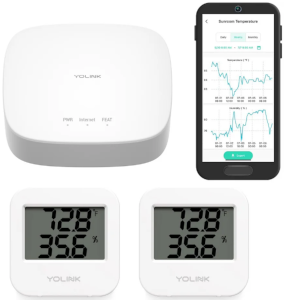 Use YoLink temperature sensors to monitor and document room conditions in your office or apartment building, perfect for proving HVAC issues to landlords or managing properties remotely. With a low-cost hub and sensor setup, real-time alerts, and long-range LoRa wireless, YoLink is ideal for commercial buildings. Expand with leak detectors, motion sensors, smart plugs, and more for a full smart monitoring system.
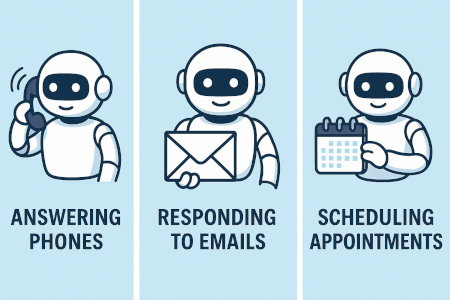 Think AI is too complex or expensive for your business? Think again. This post breaks down three simple, practical ways local companies are using AI right now, like answering phones, managing email, and scheduling appointments. If you’re curious but cautious, this is a great place to start.