
At BitFog, we recently integrated YoLink and Ecowitt sensors into a live commercial office building alongside the existing building automation system (BAS).
Our goal was simple: gain better visibility into actual tenant comfort conditions instead of relying solely on traditional thermostat and BAS data.
Most commercial HVAC systems only expose a limited number of sensing points through the BAS. In many buildings, thermostats may not accurately represent occupant comfort due to sensor placement, airflow patterns, solar loading, equipment heat, or calibration drift.
By adding independent wireless sensors throughout tenant spaces, we were able to:
- Validate BAS temperature readings against independent sensors
- Verify tenant comfort complaints with historical data
- Monitor spaces that previously had limited visibility
- Detect localized hot and cold spots
- Compare conditions across suites and floors
- Improve confidence in HVAC troubleshooting decisions
The long-range LoRa-based architecture of YoLink sensors made deployment especially simple in large commercial spaces where Wi-Fi connectivity can be unreliable or difficult to manage.
We also integrated Ecowitt environmental sensors, including black globe temperature monitoring, to better understand radiant heat effects inside perimeter offices and sun-exposed tenant spaces. Traditional thermostats often fail to capture how occupants actually experience a room, especially in areas with heavy afternoon solar gain.
By combining BAS data with independent environmental sensing, we created a much more complete operational picture of real occupant comfort conditions.
This type of layered sensing approach becomes increasingly valuable as commercial buildings adopt more data-driven HVAC optimization, tenant experience monitoring, and AI-assisted operational workflows.
 When bats returned to the attic after a professional exclusion, I built a custom detection system using a USB ultrasonic microphone, night vision RTSP cameras, a Raspberry Pi 5, and a bit of Python. The setup automatically captured echolocation calls and matched them with video, helping pinpoint the exact entry point, no attic trips required. Lewis Pest Control honored their guarantee and sealed the spot for free.
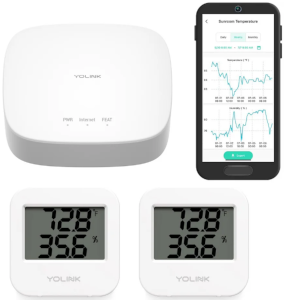 Use YoLink temperature sensors to monitor and document room conditions in your office or apartment building, perfect for proving HVAC issues to landlords or managing properties remotely. With a low-cost hub and sensor setup, real-time alerts, and long-range LoRa wireless, YoLink is ideal for commercial buildings. Expand with leak detectors, motion sensors, smart plugs, and more for a full smart monitoring system.
 Think AI is too complex or expensive for your business? Think again. This post breaks down three simple, practical ways local companies are using AI right now, like answering phones, managing email, and scheduling appointments. If you’re curious but cautious, this is a great place to start.